Aerospace Fixture
Concurrent and Flexible Design



Concurrent and Flexible Design
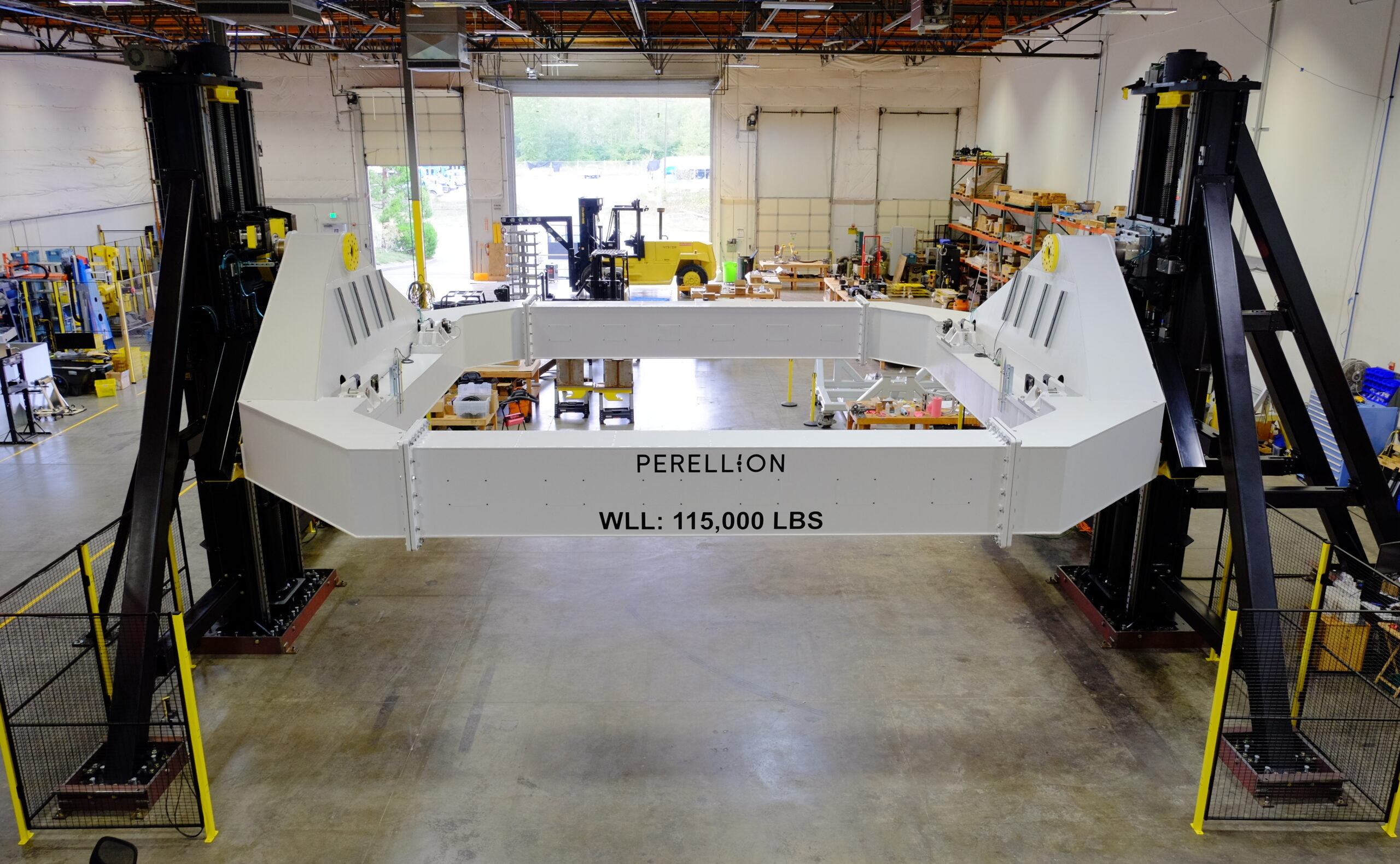
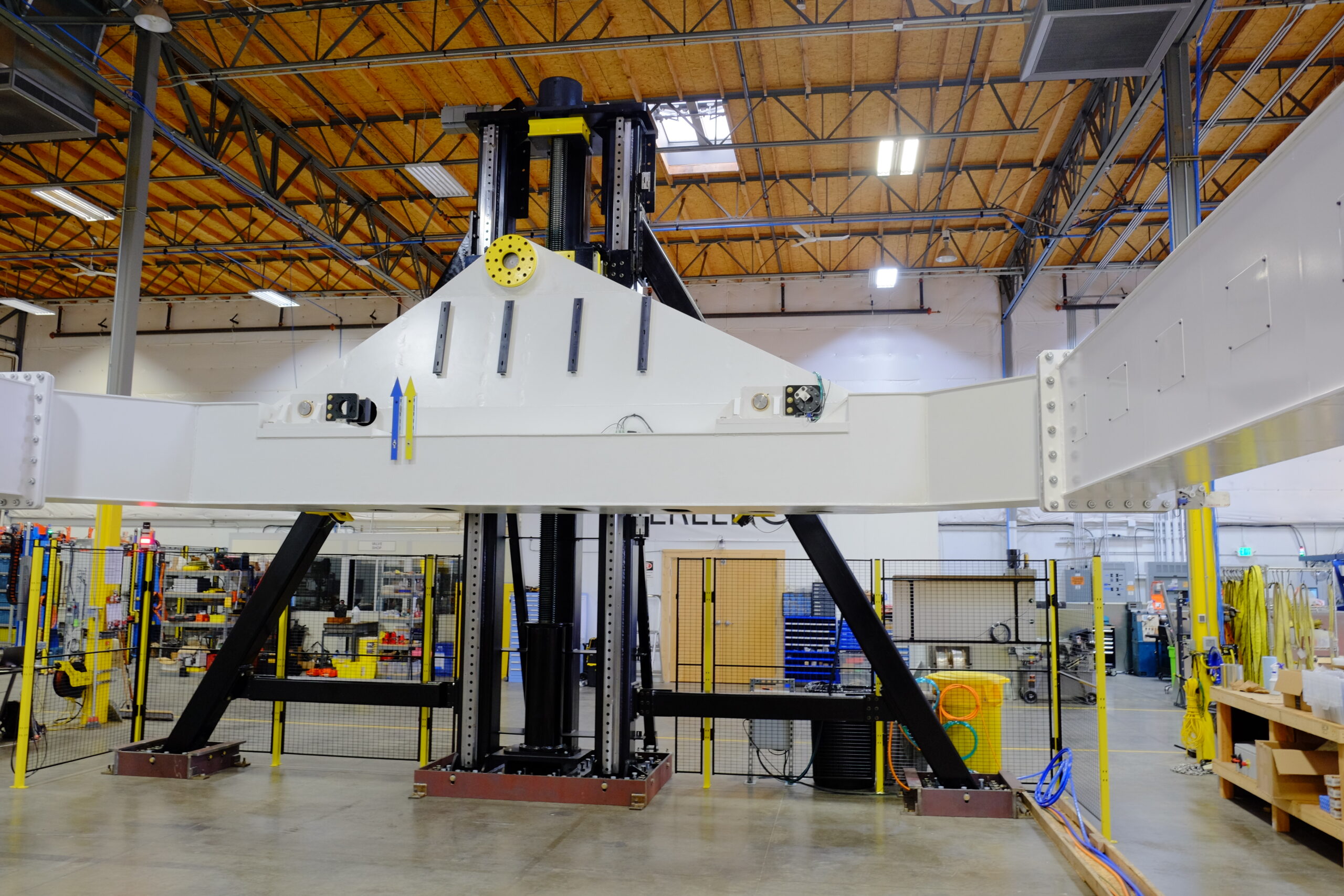


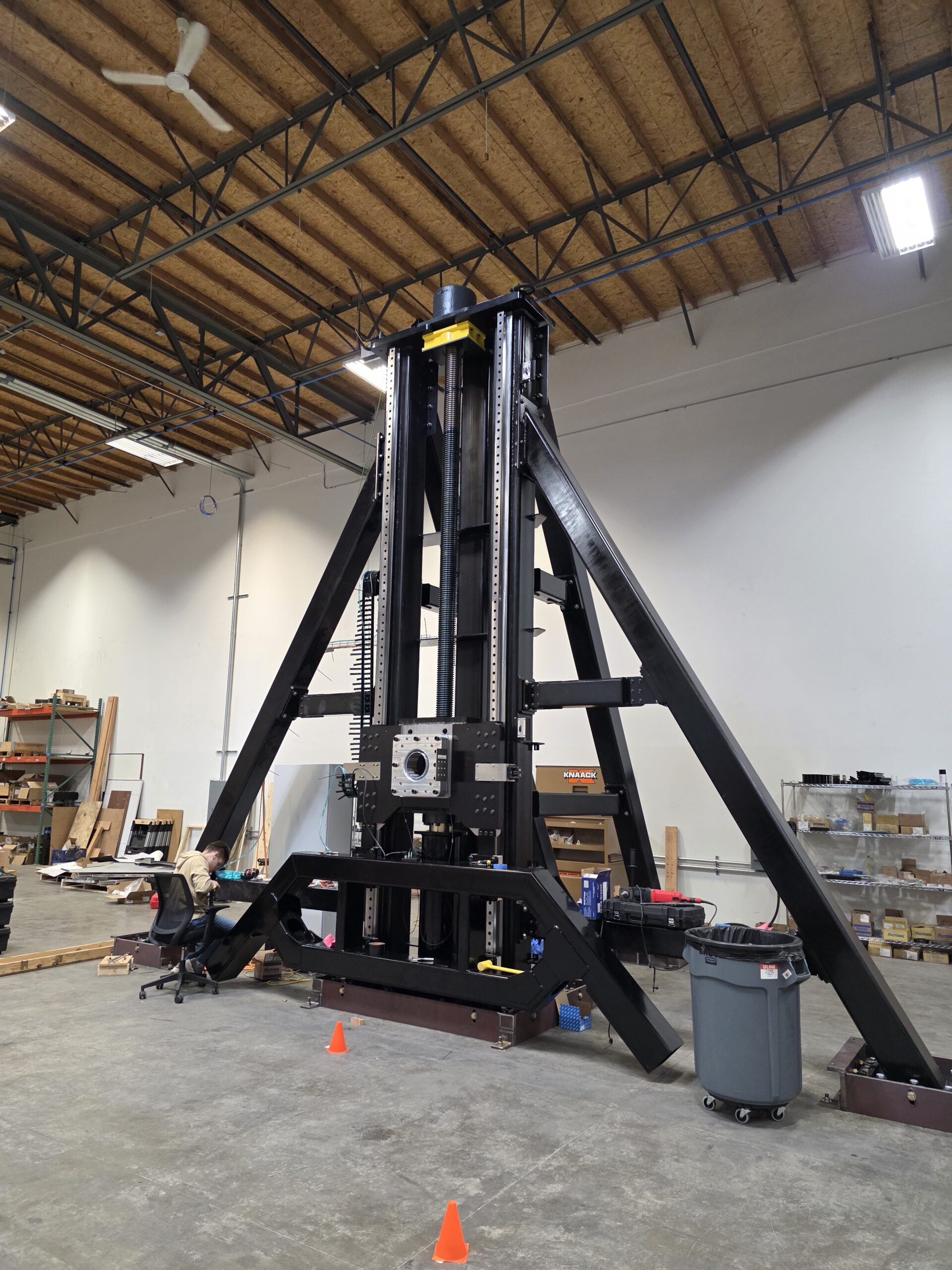
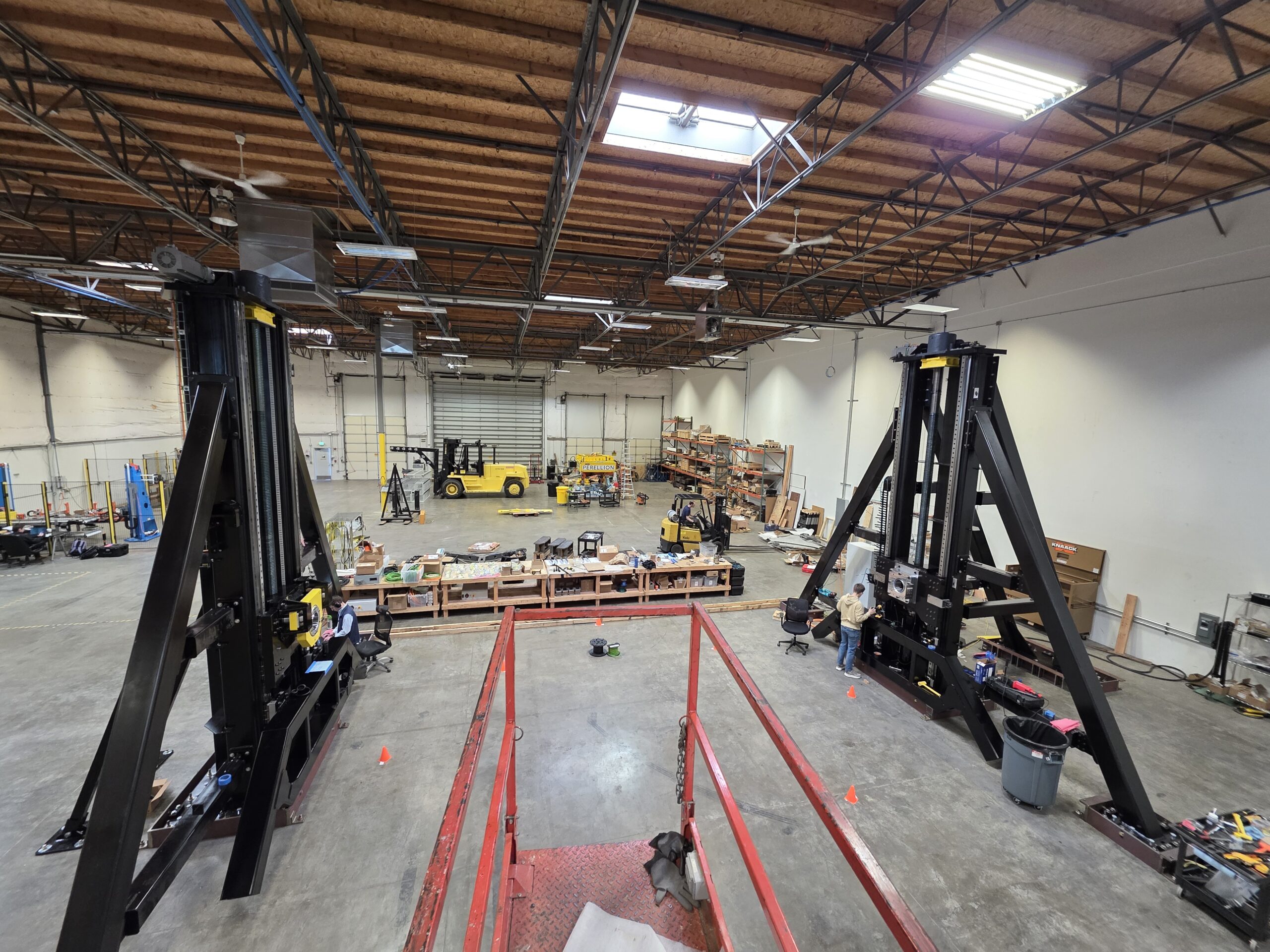
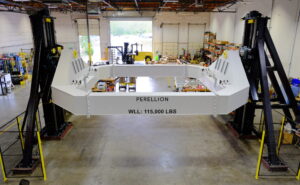
Our customer is building the thrust structure of their rocket vertically, but needs to rotate it at the end of the build cycle for horizontal integration with the rest of the vehicle. They required a fixture capable of supporting this 115,000 lb structure, translating it vertically for the assembly process, and rotating the entire assembly 90° to a horizontal position for flight hardware removal.
Large Static and Dynamic Loads:
This system required the support and controlled motion of very high loads in multiple configurations. Our engineers are very experienced in the design and fabrication of high load moving systems. Using a combination of hand calculations and finite element analysis software, they designed all the linear motion systems, rotary supports, and large steel structures in house.
Cost and Safety Balance:
One of the largest issues faced in this design was balancing safety with the cost and complexity of the fixture. An early topic of discussion with the customer regarded the method of rotation of the structure. Initially, the Perellion team proposed powered rotation with a servo-driven slewing worm drive mechanism. This would have provided a non-backdriving rotation axis, capable of positioning the structure at any angle between 0° and 90°. However, in order to meet the customer’s desired price point, an alternate plan was devised that allowed the structure to be rotated using the building’s overhead crane. To ensure that this was a safe lift, the center of gravity of the rotating structure was designed to be offset from the axis of rotation, ensuring that the crane lift is always in tension.
Close Collaboration with Civil Engineers:
Significant seismic analysis was required on this project due to the location of the customer site and size of the structure. Our team worked closely with a team of civil engineers to determine classifications for the structure and which load cases needed to be analyzed. As a part of this collaboration, custom anchors were designed for the system that met the strength requirements of ASCE 7-16 while fitting within the customer’s footprint for the machine cell. The final system involved custom steel anchors cast into the concrete, significantly shrinking the required footprint of the system.
Misalignment and Settling Over Time:
Another major consideration for this system was the alignment of the two rotary supports and their linear axes over time. Settling of the supporting towers and anchor systems could cause misalignment that could lead to binding and extreme loads in the bearings. To combat this issue, the design utilizes two high load spherical bearings for the rotary supports, with one bearing left free to translate axially as well as rotate. This ensures that the towers can settle over time without binding or becoming over-constrained. Additional sensors were also added to detect axial misalignment beyond allowable relative translation, providing an early detection system to ensure safe function of the system.
Two large tower weldment structures were designed, each with a linear axis driven by an ACME screw and electric motor. On one tower, the linear sled supported a fixed spherical bearing, while the other tower’s linear sled supported a spherical bearing that was able to translate axially, allowing the system to accommodate tower misalignment over time. Custom concrete anchors and embedded features were designed to accommodate a tight footprint of the system. A detailed safety plan, failure mode and effects analysis, and risk assessment were developed to allow for a crane lift to be utilized as the rotation mechanism, reducing the overall cost of the system.
Throughout this design process, our team performed significant concurrent design with the customer and was able to adjust the structure to accommodate their changing designs and requirements. Additionally, we were able to creatively implement design solutions with the customer, meeting their budgetary needs while prioritizing safety at every turn.